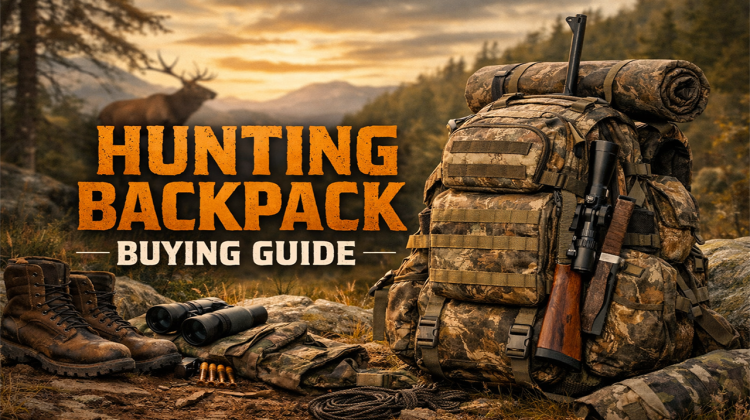
The Ultimate Buying Guide for a Hunting Backpack (Expert Tips + Top Features)
One of the most crucial choices a serious outdoor enthusiast can make is selecting the best hunting backpack. Your hunt can be made or broken by the supplies, equipment, and survival gear you carry in your pack. We’ll go over every aspect to consider in this guide, including comfort, fit, capacity, materials, and specialised hunting features. You’ll have the information you need to make an informed purchase, whether you’re an experienced hunter or a novice preparing for your first trip.
Why a Proper Hunting Backpack Matters?
A hunting backpack is not the same as a hiking bag. It has to:
- Be able to hold heavy things like gear, food, weapons, and meat,
- Spread weight out comfortably over long distances,
- Stand up to rough weather and terrain,
- Make it easy to get to important things quickly,
- Have specialized hunting tools, including bows, rifles, hydration systems, and game haulers.
If you choose the wrong backpack, you could be uncomfortable, lose your gear, get tired, or even worse on backcountry hunts.
Hunting Backpack Buying Guide: What to Look For
When comparing hunting backpacks, focus on these key areas:
1. Capacity & Size: Choosing the Right Volume:
Hunting backpacks are measured in liters (L), which is the total internal space available.
| Hunting Style | Recommended Capacity |
| Day Hunts | 20–35L |
| Overnight | 40–60L |
| Multi-day Trip | 60–90L+ |
- 20–35L: Best for short hunts where you only need essentials,
- 40–60L: Ideal for overnight or pack-in hunts,
- 60–90L+: Designed for extended trips and carrying meat.
Big packs don’t always mean “better.” Overpacking leads to strain and fatigue.
2. Type of Frame: External or Internal:
The frame affects the stability and comfort of the load.
Hunting Backpack with an Internal Frame
- Good balance and a sleek design,
- Better for climbing and small spaces,
- More comfortable for longer trips,
- Hunting Backpack with an External Frame,
- Can carry a lot of weight. Stable for carrying heavy game,
- Usually bigger and heavier.
Best Practice: Most hunters find that internal frames work well on a variety of terrain. External frames are best for long trips where keeping the load stable is important.
3. Fit & Comfort: Don’t Ignore This!:
An ill-fitting pack quickly becomes uncomfortable. Be mindful of:
👉Adjustable Suspension Seek out:
- Length of torso,
- A hip belt,
- Shoulder straps.
Everybody has a unique body. Soreness is avoided with a customizable fit.
👉Padding & Support:
Thicker padding on:
- Shoulder straps,
- Hip belt,
- Back panel,
ensures comfort during long treks.
👉Ventilation
Mesh back panels and ventilation channels help reduce sweat — especially valuable on warm-weather hunts.
4. Material Durability & Weatherproofing:
Hunting trips often involve rough terrain and unpredictable weather.
👉Material Strength:
Most high-quality packs use:
- 600D–1000D Nylon,
- Ripstop fabrics,
- Water-resistant coatings.
Stronger materials increase lifespan and protect against thorns, branches, and drops.
👉Weatherproofing:
Look for:
- Rain covers or built-in hoods,
- Sealed seams,
- Water-resistant zippers.
These prevent the gear from getting soaked.
5. Accessibility & Organization:
A good organization makes hunting easier.
👉Key Features to Look For
- Multiple compartments: Separate gear and supplies,
- Quick-access pockets: For tools, snacks, GPS, binoculars,
- Side openings: Easy access without unpacking the whole bag,
- Tool attachments: For knives, axes, trekking poles.
An efficient organization avoids fumbling during critical moments.
6. Hydration Compatibility
Long hunts demand hydration.
Look for:
- Hydration reservoir sleeves,
- Tube routing loops,
- Pockets sized for water bladders.
Carrying water conveniently improves comfort and focus.
7. Weapon & Gear Carrying Options
A hunting backpack must make it easy to carry weapons and gear.
👉Rifle/Bow Carry Systems
Good backpacks include:
- Bow carrying systems,
- Rifle scabbard loops or straps,
- External lash points,
- Attachment clips.
This lets you securely and accessibly store weapons while on the move.
8. Game Hauling & Meat Carrying:
One of the most important features for hunters is meat-carrying capacity.
👉Game Carrying Features
- Butt-lift straps,
- External lash points,
- Compression straps,
- Frame supports,
- Separate meat compartments.
These allow you to secure heavy loads after a successful hunt.
9. Weight: Pack Weight vs. Payload
A lightweight pack makes long hikes easier.
👉 Target:
- Backpacks under 6 pounds (when empty),
- Still sturdy enough for heavy gear.
Light doesn’t always mean flimsy — quality materials can be both light and strong.
10. Accessories & Attachments:
👉Extra features matter:
- Rain covers,
- Detachable daypacks,
- Compression straps,
- MOLLE webbing,
- Gear loops.
These expand the pack’s utility in the field.
11. Price & Value:
Hunting backpacks range from $50 to over $400.
👉Typical Price Ranges
- Budget ($50–$100): Basic features, lighter loads,
- Mid-Range ($100–$250): Best balance of quality and price,
- Premium ($250+): Heavy-duty, feature-rich, expert hunters.
Spend more for comfort and durability — but don’t overspend on unused features.
12. Brand & Warranty
Popular hunting pack brands are often a safer choice because they stand behind their gear.
Good warranties indicate confidence in the product.
👉Look for:
- Manufacturer warranties,
- Customer support policies.
13. Testing & Comfort Trials:
Before committing to a pack:
- Try it on loaded with weight,
- Adjust straps & hip belt,
- Walk around to check comfort.
No photo can replace a real-world trial.
14. Safety & Survival Add-Ons:
Some packs include:
- Emergency whistles,
- Reflective patches,
- Compass holders,
- Fire starter pockets.
These add real value on backcountry trips.
15. Seasonal Considerations:
Your hunting season affects pack choices:
|
Season |
Best Features |
|
Cold Weather |
Insulation attachment points, water resistance |
|
Warm Weather |
Ventilation, light weight |
|
Hunting with Dogs |
Extra gear loops, larger compartments |
|
Backpack Hunting |
Lightweight, stable suspension |
Our Recommended Checklist Before You Buy
✔ Fit & size tailored for your body,
✔ Capacity fits your hunt duration,
✔ Comfortable, padded and adjustable,
✔ Durable water-resistant material,
✔ Weapon and gear attachment systems,
✔ Hydration compatibility,
✔ Game hauling features,
✔ Strong, lightweight frame,
✔ Weatherproofing,
✔ Good warranty and brand reputation.
Conclusion: The Best Hunting Backpack Depends on Your Hunt
There’s no one-size-fits-all when it comes to a hunting backpack. The best choice depends on how long you plan to hunt, where you’ll go, how much gear you carry, and your budget. Focus on comfort, durability, organization, and specialized hunting features.
By understanding capacity, materials, fit, and functionality, you’ll confidently pick a hunting backpack that enhances your adventure — not weighs you down.
FAQ — Hunting Backpack Buyer Questions Answered
👉Q1. What size hunting backpack should I choose?
A: Choose based on trip length — ~30L for day hunts, 50–60L for overnight, and 70–90L for multi-day expeditions.
👉Q2. Should I get an internal or external frame pack?
A: Internal frames are more versatile and comfortable for walking and climbing, while external frames excel at heavy loads and meat hauling.
👉Q3. Is hydration compatibility necessary?
A: Yes, having a hydration reservoir and easy tube access helps keep you hydrated without slowing you down.
👉Q4. What materials are best for hunting backpacks?
A: High-strength ripstop nylon or polyester with water-resistant coatings is ideal for long life and protection.
👉Q5. Can a hiking backpack be used for hunting?
A: You can, but hunting backpacks have specialized weapon carry systems and game hauling features that hiking bags lack.
👉Q6. What accessories should my hunting backpack have?
A: Look for rain covers, bows/rifle attachment systems, compression straps, hydration sleeves, and MOLLE webbing for custom gear mounting.